
Online since 1996. Automotive, motorcycle, 4WD and Drive Travel Stories. Everything automotive culture.
01 February 2011


05 January 2011
Highs and lows - across Australia
The Great Honda Adventure 2010 for Honda Magazine
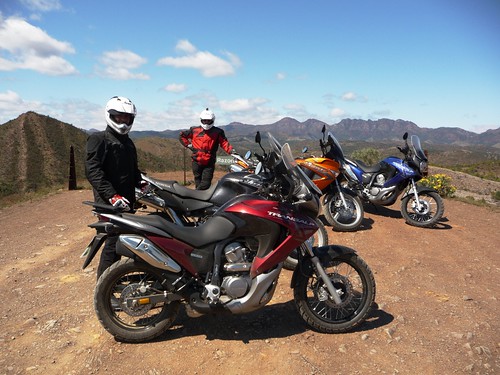
IndyCar champion, Dario Franchitti, escapes the high powered world of elite motor sport for a fun dare – to ride, drive, walk and float between Australia’s highest and lowest points. Roderick Eime joins the adventure.
01 December 2010
01 October 2010
02 August 2010
Safety on the Slopes
Winter is snow season and thousands of us will be heading to the Alps for a ski break at one of the NSW or Victorian resorts. Many of us will choose to drive to the slopes and some, unfortunately, will come unstuck on the treacherous roads. Snow driving is so completely foreign to most urban commuters that many will find themselves in trouble before they even knew they are in danger. If you intend to drive yourself or your family on a ski holiday, make sure your vehicle and yourself are ready for this alien environment. Here's a simple checklist before you set out;
- Make sure your airconditioner, anti-freeze, wipers, brakes, lights and tyres are in tip-top condition. You'll need your air-conditioner to clear a fogged windscreen, wipers to clear snow and frost, and tyres with good tread for slushy roads. Drive with your lights on, even if you think you don't need to.
- Drive to the conditions. Yeah, we've all heard that old chestnut, but snow driving is a condition few of us face regularly so our daily driving habits could be our downfall. Heavy snow is like the worst rainstorm with a film of oil on the road. Drive slowly and use brake and accelerator delicately. Turn the steering wheel gently, understeer is your enemy and will soon see you in a ditch or facing oncoming traffic.
- True, All-Wheel-Drive (AWD) and 4WD will make snow driving safer, but don't rely on electronic driving aids too much. They're not infallible. Imagine you don't have anti-lock brakes and traction control and drive accordingly. Don't use cruise control and select low gears for up- and downhill sections.
- Expect the unexpected. Imagine there is a rockfall or avalanche around every blind corner – or another stranded motorist. When passing oncoming traffic, slow right down and give heaps of space. Stop if you have to.
- If you are proceeding along an unfamiliar route and there is a fresh covering of snow, seriously consider whether you should be the first to explore this road. Wait for a local to go first.
- Diesel drivers should use 'Alpine Diesel' formulated for cold conditions. Normal diesel can 'wax' and clog you fuel system.
- Always carry some emergency gear. A small shovel, tow rope, high power torch and visibility vest is a good start.
- In extreme conditions you are required by National Park Regulations to carry snow chains. You will be notified where you must fit these and you should know how to do it. Some resorts offer chain fitting services, but don't rely on this. Always fit chains to your drive wheels ie front wheels on front-wheel-drive cars. Don't laugh, it's happened. 4WDs are exempt, but chains can still be fitted for extra safety.
- If you regularly travel to snowy regions, consider a spare set of wheels and tyres with special snow/ice tyres fitted.
Subscribe to:
Posts (Atom)
Last Month's Most Popular Posts
-
It might be politically incorrect today to promote Australia’s iconic Chiko Roll with a scantily clad woman draped provocatively across...
-
 If you were going to cite your best-remembered police bike, most of us would cite the big Harley-Davidson as the most iconic in this genre. ...
 -
Chinese electric vehicle manufacturers took centre stage at the 47th Bangkok International Motor Show, underscoring their growing influence ...
-
Chery Australia says it has received more than 20,000 submissions in a nationwide competition to name its upcoming plug-in hybrid diesel ut...
-
In 1982, while most 23-year-old architecture students in London were worrying about their final portfolios, Elspeth Beard was busy packing ...


