01 June 2010

A Matter of Taste: Style or Bile


OUTthere Issue 72

Style or Bile?

Car styling, like all fashion comes and goes in waves. The 1930s produced some of the most magnificent lines, while the fifties became ‘blocky’. The ‘60s stand out as the most daring while the ‘70s and ‘80s slumped into the hideous doldrums.

Just as art can split opinions, so can cars. Some might say beauty is in the eye of the beholder, but car fans are predictably unanimous in their verdicts. Roderick Eime wades into the argument with his own opinion.

The World’s Most Beautiful Car
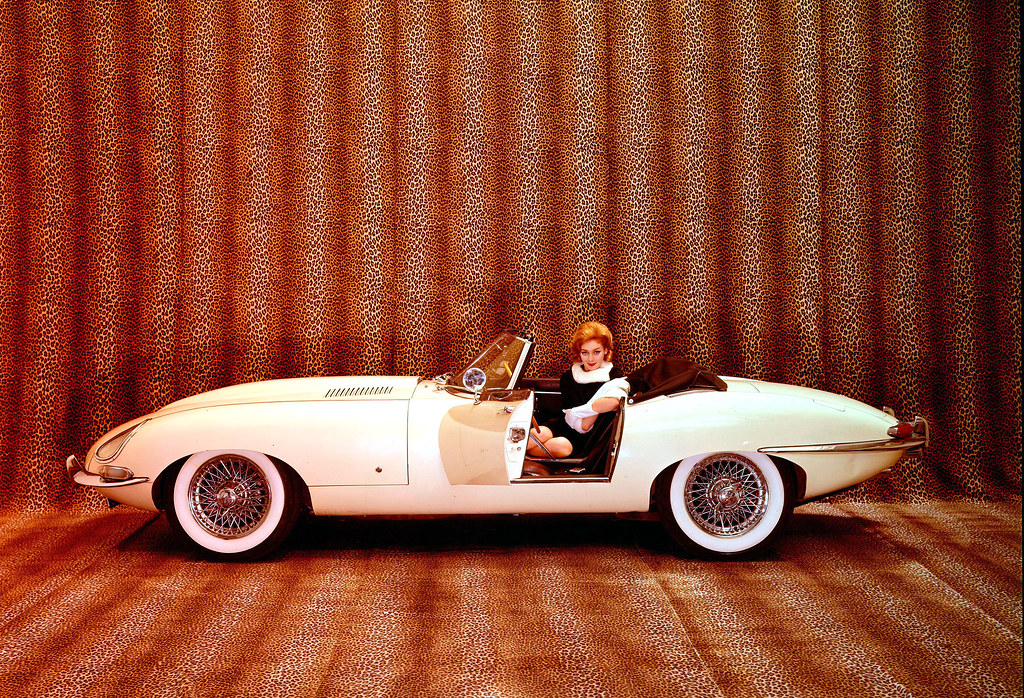


A jury of the world’s great car designers ruminated long and hard, but one car that keeps appearing in every list of gorgeous automotive creations is the Mark 1 E-Type Jaguar.

Conceived in the brash 1960s, when style still meant something, it survived until 1975 when the infectious design malaise finally struck even this most beautiful of cars.

Available in both coupe (FHC) and convertible (DHC), lovers of the marque are split over which is most visually pleasing, but both camps are delighted to disagree over such a pleasant argument. Even Enzo Ferrari called it "The most beautiful car ever made".

Powerful, glamorous and reasonably priced, the E-Type took the US market by storm in March 1961 and immediately spawned a domestic UK market four months later. More Mark 1s (38,000) were made than both the Mark 2 and 3 together.

Originally fitted with the successful and sweet-revving 3.8 litre DOHC straight six, it was uprated to the 4.2 litre version in 1964. The Mark 3 was fitted with a massive V12 which many purists saw as a vulgar expression.

Designer, Malcolm Sayer, saw himself more as an aerodynamicist than an automotive stylist. He had previously worked in aircraft design during the war and was instrumental in some of Jaguar’s most enduring models, including the similarly pleasing C and D Type racing cars.

Other short-listed: Italian triumph, Ferrari 275GTB; Lightweight English looker, Lotus Elan.
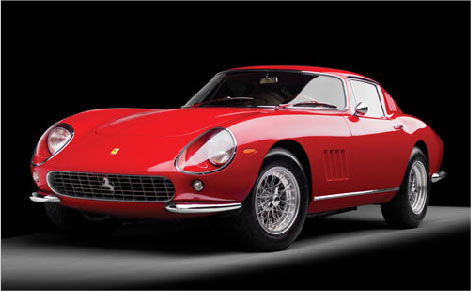
Ferrari 275GTB

The World’s Ugliest Car


Yes, this is a real ad.
Universally reviled by glamour car enthusiasts worldwide, the 1975 AMC Pacer stands alone. Remarkably, the US-built 2-door coupe designed and sold by the folks who brought us a string of automotive travesties like Rambler, Nash and Humvee manufactured this “hat full” for five years. 280,000 of them were produced in both hatchback and wagon before Chrysler put the world out of its misery in 1987 by buying the brand and renaming it Eagle.

There’s no accounting for taste and the Dick Teague-designed car made the transition to UK and European markets, producing perhaps the world’s ultimate bad taste car advertisement for the “racy” French market.

Ironically the car reached a level of cult status when it starred in the 1992 nerd movie “Wayne’s World” and is now an icon of ‘70s bad taste and cringe fashion. There was even a Levi’s version complete with denim seats and brass buttons. What were they thinking?

Other short-listed: Yugoslavian fiasco, Yugo; the Great Aussie eyesore, P76.


01 May 2010

Francis Birtles: He’s 'Bean' Everywhere

OUTthere Magazine : Issue 71

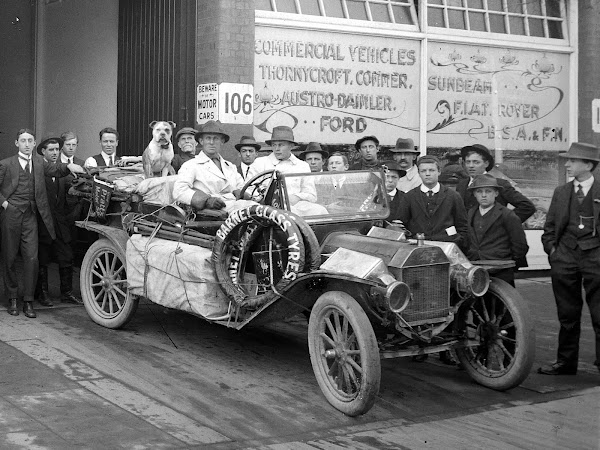
Francis Birtles, younger brother Clive and dog Wowser about to set out from Melbourne in a 1913 Model T Ford on a 10,000 mile trip to Perth via Sydney and Darwin. Famous photographer, Frank Hurley, joined them in Sydney. Photo by Algernon Darge (State Library of Victoria)

A marathon motorist reclaims his place in Australian folklore. Roderick Eime pays homage.

Most of us think Australia’s heroes are well known. They are the men and women we read about in newspapers, history books and sports reports. At school we learn about Mawson, Simpson, Kingsford-Smith and Chisholm, but still our unknown achievers and record-breakers are creeping out of the cracks.

Adelaide-born Sir Hubert Wilkins is now remembered as the first man to fly across the Arctic and take a submarine beneath the ice pack, while Mary MacKillop bounds headlong into sainthood. Yet one man, Francis Edwin Birtles, has almost disappeared into history.

Born in Melbourne in 1881, Birtles was a crazy cyclist bent on breaking records. Like some Forrest Gump on wheels, he first set off from Fremantle in 1905 and didn’t stop for seven years. By 1912, he’d cycled around Australia twice and crossed the continent seven times.

But his exploits in the automobile are perhaps his most remarkable. In 1912, he completed the first west-to-east crossing of the continent with Syd Ferguson and a dog. The car was a single cylinder Brush. Later with Frank Hurley and his brother Clive, he began filming his journeys creating films such as Into Australia's Unknown (1915), Across Australia in the Track of Burke and Wills and in 1919, Through Australian Wilds, following the track of Sir Ross Smith.

He continued to set records driving around Australia completing some 70 transcontinental crossings. In 1928 (the same year Wilkins flew the Arctic) he completed a nine month journey from London to Melbourne, becoming the first person to do so.

Championed by political cartoonist and former host of Aussie Top Gear, Warren Brown, Birtles has enthralled him for his feats of mechanical and human endurance. Brown has even restored a 1925 Bean and intends to retrace Birtles’s route from London.

“80 years ago he was a household name across Australia,” Brown reminds us, “part action man, part bushman, part madman.”

Birtles’s first attempt at the drive in the prototype Bean Imperial Six was a disaster. The car broke down in India and so did they. Undaunted, Birtles vowed another attempt, this time in his own car, the trusty Bean 14, nicknamed “Sundowner”.

This nine-month odyssey, Brown believes, is perhaps the most astonishing motoring adventure in history. Across searing deserts, through blinding snowstorms and steaming jungles, Birtles quite often made his own roads as he went.

In the depression-ridden 1930s, Birtles went outback again to prospect for gold, looking for the notorious Lewis Lassiter in the meantime. He found gold, but the extreme pace of his life had taken its toll and Birtles died of heart disease in Sydney in 1941 and is buried in Waverley Cemetery. He was 60 years old.

Relics of Birtles and his adventures are hard to find, but his most significant legacy is the original Bean motor car (pic right) on display at the National Museum of Australia in Canberra, donated by Birtles and Bean Cars Ltd in 1929 for the express purpose.

========

This is the colourful story of FRANCIS BIRTLES, a fascinating individual who led a life of incredible adventure and exploration in Australia and throughout the world.

A narrative account of the life and times of one of Australia's most extraordinary adventurers - a man who crossed Australia more than 70 times in the early part of the 20th century - by bicycle and car.

In 1927 he achieved the greatest motoring feat of the times, driving a car from London to Melbourne. This story follows his exploits across scorching Arabic deserts, through steamy Indian jungles and mountain snowstorms.

In between these journeys he made a collection of documentaries and films of his encounters with the outback. He documented his exploration of Australia in his book, BATTLEFRONTS OF OUTBACK. He eventually travelled to the Northern Territory in search of gold and retired a wealthy man.

01 April 2010

Hyundai: Re-imagining Fluidic i-Sculpture

OUTthere Magazine All Torque Issue 70


In the ferocious, crisis-ridden world of the automobile, manufacturers constantly jostle for the attention of new car buyers. Each new vehicle launch is characterized by bold additions to the dictionary of car speak and Korean giant, Hyundai, now has some of its own.

‘re-imagine’, ‘design DNA’ and ‘fluidic sculpture’ are my new buzz words for the week after witnessing Hyundai Australia’s razzle-dazzle launch of their new compact SUV, ix35.

In the online universe, it seems everything from sandwich spread to off road vehicles are now designated i-something. The buying public might have soundly trashed the idea of smearing i-paste on their sandwiches, but Hyundai have struck a chord.

The first i-sedan, the i30, is part of the Korean’s new uniform ‘design DNA’, centred around the hexagonal motif. Launched in mid-2008 and immediately a hit, the i30 stands up well against established segment leaders such as Ford Focus and VW Polo. Compact i20 will be next and the Sonata replacement, currently codenamed YF, soon after.

Hyundai (pronounced hee-unn-DAY), the 64-year-old South Korean industrial megalith, makes everything from oil tankers and locomotives to MP3 players with a presence in Australia dating back to 1986 when Alan Bond first introduced the little Excels. That cute utilitarian runabout made history by becoming the top selling car in June 1998. Yes, it outsold both Ford Falcon and Holden Commodore with 8663 units. The Korean continued to irk the majors when in 2009 Hyundai Motor Company Australia posted its best-ever annual result. December sales of 4,039 represented a 4.6 per cent market share and an increase of 12 per cent over Dec 2008 results

Apart from Australia, Hyundai’s sales trends have curved the opposite way to most manufacturers around the world. US Fortune Magazine dubbed Hyundai “The toughest car company of them all” saying “competitors hate them, customers love them.” Their flagship, full-size Genesis is gathering awards faster than James Cameron.

The ix35 is an impressively packaged little AWD device and will certainly impact on segment front-runners RAV4, Dualis, Forester and CR-V.

The 2.0 turbo diesel is responsive and amazingly frugal, delivering results in the sub-5.0s when driven carefully. It is the pick of the three engine options. A full suite of electronic driver assistance features is included from the base up, a marketing decision that will certainly put ix35 on the shortlist of the target demographic, the professional, urban-dwelling 25-49 man or woman with a small family.

Styling, without buzzwords, is bold and sexy and, as the marketing team like to remind us, displays masculine chunkiness externally, with a flowing crisp, neat feminine feel inside.

ix35 will be in showrooms around the country by the time you read this. Base model 2WD petrol ‘Active’ is priced from a sensible $26,990 and ranges up to the fully-tricked (18” alloy wheels) ‘Highlander’ at $37,990.

For further information, visit www.hyundai.com.au or one of over 50 dealers around Australia.

01 March 2010

There’s No Trick to Safety

OUTthere Magazine : Issue 69


Today’s modern 4WD is far removed from early Jeeps and Land Rovers that burst onto the scene in the ‘40s and ‘50s, especially in terms of safety and comfort.

Equipped with an array of handy driver aids, have you even looked at what your urbanized all-wheel-drive can do? Here’s a list of some of the latest tricks now being shipped as standard with modern off-road vehicles and even sedans. You may find these driver aids handy on your next rural adventure, or they may even save your life. Pay attention.

Hill Descent Control system

Originally developed by Land Rover for use in their baby Freelander, this feature makes push-button work of a skill even many experienced 4WDers get wrong. The system is an adaptation of the ABS which monitors each wheel as the vehicle descends a steep, slippery slope, making the descent safely without tricky braking and clutch control from the driver. Piece of cake.

Traction Control (or Anti-Slip Regulation)

Designed for powerful road cars to improve the effectiveness of the Limited Slip Differential, the technology made an easy transference to off-road vehicles. Traditionally 4WDs used a locking differential for traction in the worst conditions, but an ever-ready Traction Control is more user friendly for regular drivers. In short, if a wheel begins to slip, torque is automatically transferred to the wheel with most grip

Electronic Stability Program (ESP)

Much more than just another flashing light on your dashboard, ESP is perhaps one of the most important safety developments for all vehicles, not just 4WDs. Meshed with the computer that controls ABS and TC, ESP will intervene if it detects skidding or loss of steering control. It will bias braking to counteract over- or understeer and possibly avert an accident. Vehicle safety authorities are lobbying hard to make this feature mandatory on all new motor vehicles. Smart.

Rear View Camera or Parking Sensors

One of the greatest dangers with vehicles, particularly high driver position 4WDs, is rear vision, or lack of it. We’ve all backed into something we didn’t see in the mirror and that makes a rear view camera more than a status symbol or toy. Whether you are backing a boat, caravan or just getting out of your driveway, unseen obstacles are a threat – or in some cases, you are the threat. Parking warning sensors or even rear view cameras can also be retro-fitted to most vehicles.

Also on the menu:
  • Brake Assist (BA): Gives you added pedal pressure for an emergency stop
  • Electronic Brake-force Distribution (EBD): Shortens stopping distances by braking wheels with most traction
  • Hill Start Assist (HSAC): Stop you rolling backwards on a hill start.
All the tricks and gadgets in the world should never replace old-fashioned common sense and safety. Drive within your limits and to the conditions – and pay attention to servicing, tyre condition and brakes.

Last Month's Most Popular Posts