Roderick Eime
The term ‘iconic’ has been bandied about so much, it has little meaning left. But when it did mean something, it referred to brands like Triumph. And to achieve ‘iconic’ status you need to earn it.
It may have been a rough road, but Triumph Motorcycles weathered two World Wars, a Great Depression and the biggest threat of all, Asian competition. It built personality, prestige and an irresistible desirability through associations with such masculine style icon pillars as Steve McQueen, Marlon Brando, Bob Dylan, James Dean and even Elvis Presley. Now if that pedigree team of superstar riders doesn’t make a boy want to get on a bike, I don’t know poo from clay.
Like James Bond and Aston Martin, Ayrton Senna and TAG Heuer, the male brand bonding between Steve McQueen and Triumph Motorcycles in particular was a match made in heaven. In fact, so enamoured with the brand was McQueen, that he even had Germans riding them in his 1963 WWII classic, ‘The Great Escape’. You didn’t know that? Look closely.
Triumph didn’t seem to mind this historical faux pas either. They even celebrated it with a limited edition Triumph Bonneville, released in 2011.
Triumph Revival
One of the oldest brands in motorcycle history, the first Triumph motorcycle went on sale in 1902 and continued until 1983 when, like so many established yet complacent European brands, they were overtaken by the rush of Japanese machines like Honda, Suzuki and Kawasaki.
Reborn in 1985 through the acquisition of the brand by John Bloor (now an OBE), and despite numerous global subsidiary operations, the company remains 100 percent UK-owned. By all accounts, Triumph is riding high with its superbly crafted, retro-styled machines that channel both the extensive history of the marque and the trademark styling of their ‘60s classics, particularly the big twin Bonneville. The full range of Triumph machines however, includes everything from touring, adventure, naked, sports and cruiser.
Aussie riders embrace new Bonnies
The big new Bonneville T120 sold almost 300 units in 2016 from an April start. About the same as the Ducati Scrambler and Honda CB500 did for the full 12 months. 2017 has seen it take off, leaving both those rivals for dead and selling close to 100 units by end of March, helping Triumph to the #5 spot on the list of ‘Australian Road sales by brand’.
Like a tenacious prizefighter’s ‘old one, two’, Triumph are following up this success with the T100, a new entry point for riders wanting to be one with their own ‘Bonnie’. Powered by the soothing and percussive 900cc parallel twin, the T100 and its evil twin, the T100 Black, bear an immediate heartwarming resemblance to the original 1959 model that began this stalwart heritage.
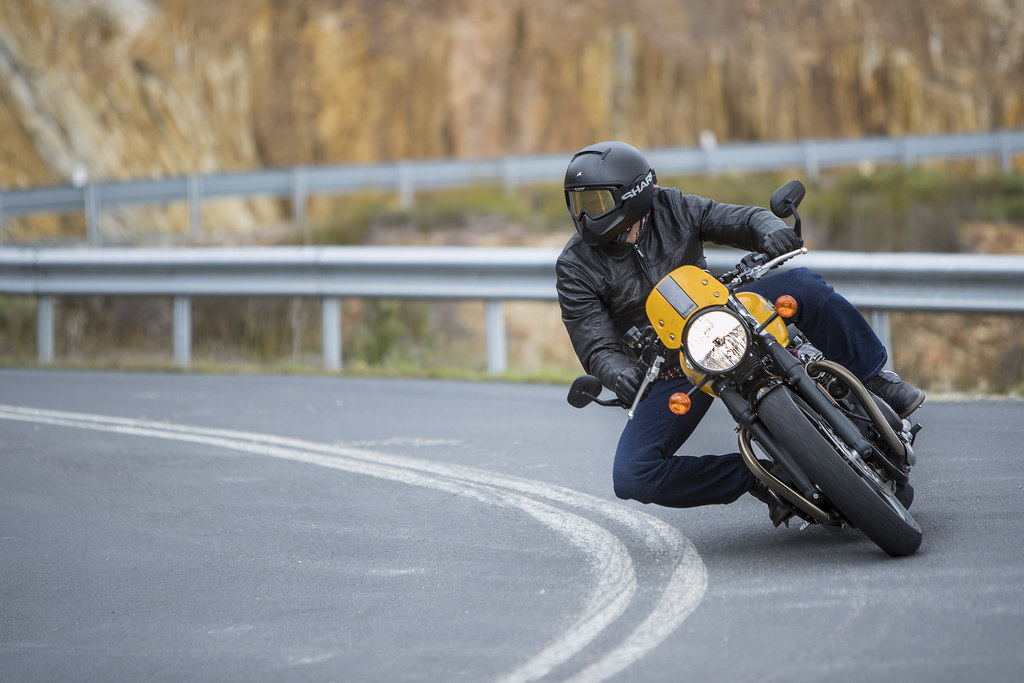
The Street Cup is Triumph's other ‘16 release that employs the same 900cc Bonneville engine in an immaculate ‘cafe racer’ chassis complete with all the stylish accoutrements like bullet seat, tiny ‘flyscreen’ windshield and bold paintwork to match its ‘racer’ silhouette. The bike pays homage to the incredible 1969 feat of Welshman, Malcolm Uphill who rode a Bonneville to win the Isle of Man Production TT race while recording the first 100mph lap for that class.
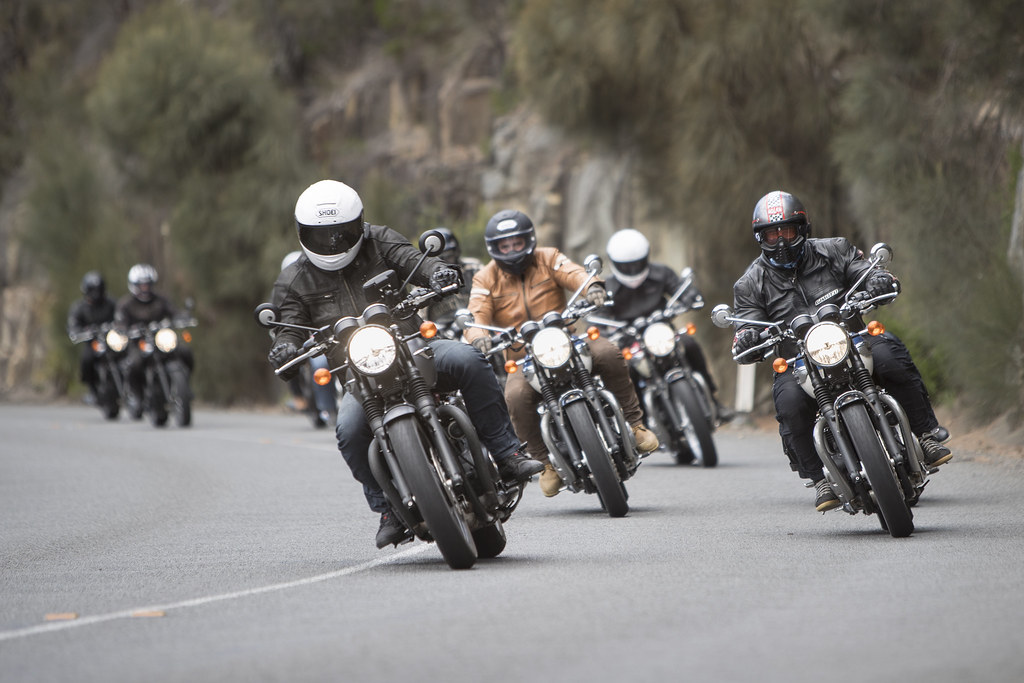
The modern Bonnevilles deliver plenty of satisfying, silky smooth acceleration in an easy-to-manage, neutral-handling package that is a breeze around town and just as exciting on the open road. The milder-mannered T100 is a little easier to manage than the T120 which, by comparison is the big, bare-chested 1200cc brute of a brother. Similarly, the 900cc Street Cup, just feels fast in an ‘old school’ understated manner without the grotesque modern and luminous fairings that seem to typify today’s struggling sport bikes .
‘Brutal Beauty’ Bobber Bonnie a surprise hit
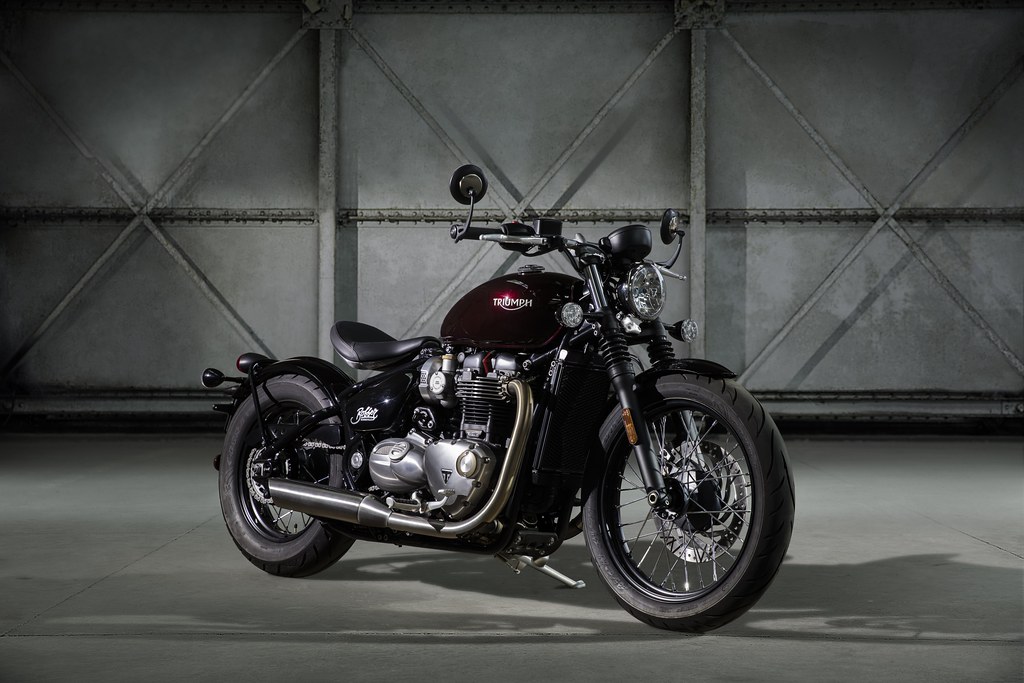
To take the retrospective to a whole new level, the single seat ‘bobber’ version of the Bonneville has proven another massive hit with riders seeking both street cred and a thoroughly enjoyable ride on a machine not stapled together with rusty chicken wire, proving a modern ‘Cafe Racer’ doesn’t have to be some stunt bike from a Mad Max sequel.
Maybe it was the ‘hot rod’ exhaust tuning or low down power from the re-tuned high torque 1200cc engine it shares with the T120 but, released in late 2016, it became the fastest selling motorcycle in Triumph’s 115-year history and kept the marque swimming in the early months of 2017 as many big names floundered in a sudden sales slump.
And, wait for it, 2018 sees the ‘darker, meaner, stronger’ Bonneville Bobber Black in showrooms with an even more aggressive, lightweight package.
Style never goes out of fashion
If ever there was a demonstration of “what was old is new again”, it’s the enduring affection motorcycle lovers - old and new - have for a brand that respects both classic heritage and current technology, combining both in a package that delights equally riding purists and design geeks.
Model Spotlight: Bonneville T100 and T100 Black

Inspired by the legendary ’59 Bonneville and styled to incorporate more of the signature design, silhouette and character of the original, the T100 and T100 Black each have their own distinctive character, enhanced by the premium finishes and familiar touches of a that classic, original motorcycle.
Sharing the instantly recognisable Bonneville lines and many of the key features of the T120, the new T100 and T100 Black both reflect the same timeless beauty. From the sculpted form of the 14.5 litre fuel tank, to the intricately detailed Bonneville engine plate and feature-rich twin clocks, the new T100 incorporates new standards for quality and finish.
The Bonneville T100 features the classically inspired detailing and stunning chrome finishes you’d expect on such a bike. Gleaming brushed aluminium covers, classic bolt-on Triumph badges unique to these two models are teamed with deep chrome mirrors, mudguard stays, handlebars and headlight bezel.
Contributing to the classic Bonneville profile on the T100 is the detailed comfort and pillion seats, finished in contrast piping with deeper foam for extra comfort.
Apart from the key components of the new T100, the T100 Black goes dark and sophisticated with fully black components including wheel rims, a twin-skin, matt peashooter exhaust and blacked-out engine covers for an unmistakable look.
Model Spotlight: Street Cup
With a name inspired by the club racing scene, the Street Cup is designed to deliver all the attitude, personality, presence and style of a contemporary custom cafe racer for today’s riders.
Sharing the same styling principles as the Street Twin, the new Street Cup has the unmissable Bonneville silhouette combined with clean lines, minimal bodywork and modern finishes. Cast wheels, an elegant fuel tank with a locking fuel cap, black sculpted engine covers with the Triumph makers mark triangle and Bonneville engine badge, this exciting bike is rounded off with an elegant single throttle body with aluminium finisher and distinctive finned head and header clamps.
To match its ‘street racer’ attitude the Street Cup packs more sports-focused ergonomics without compromising rider comfort. Compared to the Street Twin the rider is seated slightly higher and further back and the ‘Ace’ style handlebars are positioned lower and slightly forward to improve physical turn in.
Key Specs (all models)
Engine Type: Liquid cooled, 8 valve, SOHC, 270° crank angle parallel twin
Capacity: 900cc
Bore/Stroke: 84.6mm x 80mm
Compression Ratio: 10.55:1
Maximum Power: 55 PS / 54 HP (40.5kW) @ 5900 rpm
Maximum Torque: 80Nm @ 3230 rpm
============
Originally published in
OUTThere Magazine Dec/Jan 2018